Recycling and Sustainability for Landscaping Havering
 Landscaping Havering is shaped by a practical commitment to recycling, responsible material handling, and lower-impact operations. Every project can create green waste, rubble, timber offcuts, soil, and packaging, so the aim is to keep as much as possible out of landfill and move it into productive reuse streams. For local grounds maintenance and garden improvement work, that means sorting materials carefully, choosing recycled inputs where possible, and making decisions that support a cleaner, greener borough. Our approach to landscaping sustainability is built around a clear recycling percentage target, local recovery routes, and a day-to-day focus on reducing waste before it starts.
We work toward a minimum 85% recycling and recovery target across suitable site waste streams, with the goal of diverting biodegradable and inert materials into reuse, composting, or licensed processing wherever practical. In landscaping, this can include grass cuttings, hedge trimmings, leaves, branches, excavated soil, broken paving, and uncontaminated stone. Rather than treating all waste as one mixed load, we separate it at source so different materials can follow different routes. This supports better resource efficiency and helps local landscaping projects operate in a more circular way.
 A key part of our recycling in Havering approach is using local transfer stations and authorised waste facilities to sort and consolidate materials efficiently. These sites allow green waste to be processed for composting or mulching, while inert waste such as soil, hardcore, and broken concrete can be screened and repurposed. Where suitable, timber offcuts and wooden stakes may enter recycling streams, and metals from fencing or fixtures are sent to specialist recovery routes. By favouring nearby transfer stations, we reduce travel distances and keep material movements streamlined.
Havering’s wider waste culture also encourages careful separation, and that mindset suits landscaping well. Many households and businesses in the borough are familiar with separating dry mixed recyclables, food waste, garden waste, and residual rubbish, and that same discipline helps on outdoor projects. For example, clean green waste can be collected separately from soil; rubble can be kept apart from plastic packaging; and reusable paving slabs can be salvaged instead of discarded. This type of separation is not just tidy practice — it increases the chance that each material is treated correctly and avoids contamination that could send it to landfill.
We also look for ways to make the landscape itself part of the sustainability story. Native planting, soil improvement using composted organic matter, and mulching with recycled bark all help reduce demand for imported materials. Where possible, we choose products that contain recycled content, such as aggregate blends, edging materials, and certain paving products. These choices support a lower-carbon supply chain while still delivering attractive, durable results. In Landscaping Havering, sustainability is not an add-on; it is integrated into how materials are specified, managed, and reused.
 Another important strand is our work with charities and community reuse organisations. Plants that are still healthy, timber that can be repurposed, and surplus materials from landscaping jobs may be suitable for donation rather than disposal. Partnerships with local charities can support community gardens, training schemes, and low-income households looking to improve outdoor spaces. When items are no longer useful for one project, they may still have value for another, and that extends the life of materials while helping community initiatives benefit from practical resources.
Our fleet strategy is designed to support these goals too. We use low-carbon vans where feasible, selecting efficient vehicles that help reduce emissions from site visits and material transport. Cleaner vans, smarter route planning, and fewer unnecessary journeys all contribute to a lower environmental footprint. This matters in landscaping because daily operations often involve repeated local movements between sites, suppliers, and transfer stations. By improving fuel efficiency and choosing lower-emission options, we reduce the impact of the work without compromising service quality.
Low-carbon transport also fits with the rhythm of borough-level waste management. Shorter runs to transfer stations, combined deliveries, and scheduled collections make it easier to keep loads separated and reduce idle mileage. That means green waste, soil, stone, and recyclable packaging can be moved in a controlled way rather than mixed together and hauled inefficiently. It is a simple but effective sustainability measure that supports the broader recycling ambitions of the area.
We also pay attention to material ordering, because the greenest waste is the waste never created. Careful measuring helps avoid over-ordering turf, topsoil, aggregates, and fixtures. Reusing offcuts, retaining healthy shrubs where possible, and planning layouts to minimise cuts are all part of responsible landscaping recycling practice. Even packaging is considered: bulk deliveries, returnable containers, and reduced single-use wrapping can lower the amount of rubbish leaving a site.
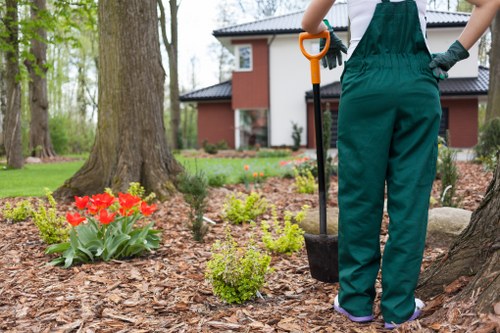 On larger projects, waste streams may be broken down into soil, stone, green waste, wood, metals, plastics, and mixed residuals so each has the best recovery route. In practical terms, that can mean leaving clean soil for screening, keeping plant waste free from contaminants, and ensuring broken concrete or brick is sent to facilities that can turn it into recycled aggregate. This kind of disciplined sorting reflects the borough’s wider approach to waste separation and helps landscaping jobs contribute positively to local resource recovery.
Education is another small but important element. Site teams are briefed to recognise recyclable materials, identify contamination risks, and store segregated waste in clearly marked containers. Good separation starts at ground level, and that consistency is what makes the recycling percentage target achievable. It also supports compliance with licensed disposal and recovery systems, which is essential for a credible sustainability programme. In other words, responsible landscaping is as much about how material is handled as it is about what is built or planted.
 Ultimately, Landscaping Havering is about creating outdoor spaces with a lighter footprint and a smarter end-of-life plan for materials. Through local transfer stations, charity partnerships, low-carbon vans, and a firm recycling target, the process becomes more circular and less wasteful. Whether the task involves garden clearance, planting, turf work, or hard landscaping, every decision is guided by resource recovery, practical reuse, and a commitment to sustainability that matches the needs of the area.